Stories about women don’t sell for as much money, don’t get made as often, and don’t win big awards, whether books, film, or TV. The numbers speak for themselves: in 15 years (from 2000-2014), the Pulitzer Prize was awarded exactly zero times to a book written primarily from the perspective of a woman. In 25 years, only one film primarily about women, Chicago, won the Oscar for Best Picture. (And you’ll be shocked to hear that the stars award-winning books and especially films are overwhelmingly white.)
Women’s voices are not being heard. This matters. Women are more than half our culture. If half the adults in our culture have no voice, half the world’s experience is not being attended to, learnt from, or built upon. Humanity is only half what we could be. Women’s stories have cooties. Why? And, more importantly, how do we get rid of them?
The story of disability
I’m disabled; I have MS: as well as being ill I am physically impaired. In my parlance, I’m a crip. Fixing the built environment—increasing physical access—is vital, of course, but it’s just a beginning. What we really need to change is people’s minds. How people see me can be as much, or more, of a problem than actual access.
How do we change minds? By changing the story. We change the inspirational cripple into a real human being. In a lot of stories, crips exist to serve as a lesson for the non-disabled. We die tragically or are magically cured to provide audience catharsis and/or cheap narrative solutions; we overcome impossible obstacles through grit and positive attitude—or just get up in the morning and brush out teeth with no hands—in order to inspire others; or (my favourite) we have an epiphany which magically makes everything okay now and relieves the audience of any responsibility for making anything better. We can do better. I have some guidelines.
About the Speaker
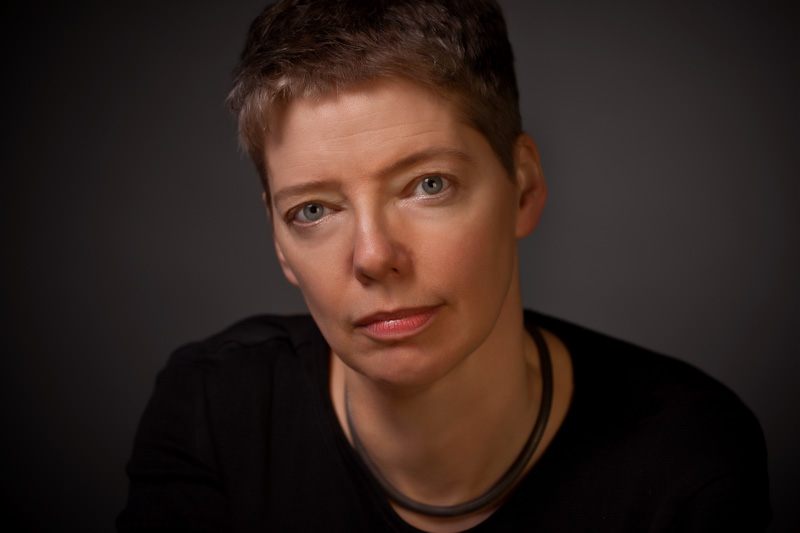
Award-winning science fiction author Nicola Griffith is a native of Yorkshire, England, and now a dual US/UK citizen. When she lived in England she earned her beer money teaching women’s self-defence, fronting a band, and arm-wrestling in bars. Then she discovered writing and moving to the US. Her immigration case was a fight and ended up making new law: the State Department declared it to be “in the National Interest” for her to live and work in this country. This didn’t thrill the more conservative power-brokers, and she ended up on the front page of the Wall Street Journal, where her case was used as an example of the country’s declining moral standards. In 1993 a diagnosis of multiple sclerosis slowed her down a bit, and she concentrated on writing. Her novels are Ammonite, Slow River, The Blue Place, Stay, Always and Hild. Her essays and short fiction have appeared in an assortment of academic texts and a variety of journals, including Nature, New Scientist, Los Angeles Review of Books and Out. Among the awards she’s won are the Washington State Book Award, the Tiptree, Nebula, and World Fantasy Awards, the Premio Italia, and six Lambda Literary Awards. She is married to writer Kelley Eskridge and lives in Seattle.