
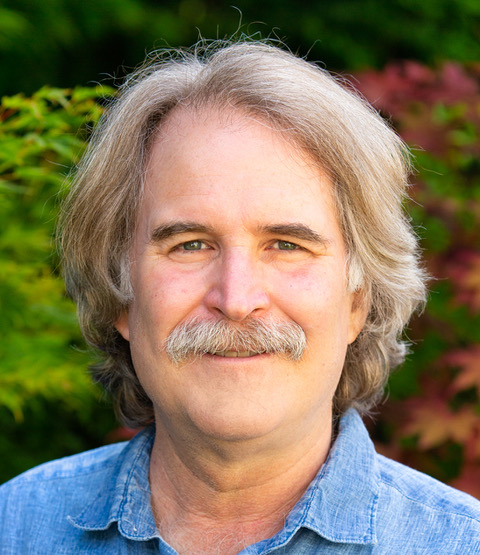
Prof. David Montgomery explores what the Earth’s soil tells us about our health, our history and our future.
In Growing a Revolution David Montgomery introduces us to farmers around the world at the heart of a brewing soil health revolution that could bring humanity’s ailing soil back to life.
Cutting through standard debates about conventional and organic farming, Montgomery explores why practices based on the principles of conservation agriculture help restore soil health and fertility.
Drawing on visits to farms in the industrialized and developing worlds he finds that the combination of no-till planting, cover crops, and diverse crop rotations provides a profitable recipe to rebuild soil organic matter. Farmers using these unconventional practices cultivate beneficial soil life, smother weeds, and suppress pests while relying on far less, if any, fertilizer and pesticides.
These practices are good for farmers and the environment. Using less fossil fuel and agrochemicals while maintaining crop yields helps farmers with their bottom line. Regenerative practices also translate into farms that use less water, generate less pollution, lower carbon emissions—and stash an impressive amount of carbon underground. Combining ancient wisdom with modern science, Growing a Revolution lays out a solid case for an inspiring vision where agriculture becomes the solution to environmental problems, helping feed us all, cool the planet and restore life to the land.
Growing a Revolution builds on Dr. Montgomery’s two previous books, The Hidden Half of Nature, (with Anne Bikle), about the micro-organisms essential to the health of our bodies and our soil, and Dirt: The Erosion of Civilization, about the devastating effects of traditional agriculture on soil quality.

About Prof. Montgomery:
David R. Montgomery is a professor of Earth and Space Sciences at the University of Washington, studying geomorphology, the evolution of landscapes. His research interests range from the co- evolution of the Pacific salmon and the topography of the Pacific Northwest to the environmental history of Puget Sound rivers, interactions among climate, tectonics, and erosion in shaping mountain ranges, giant glacial floods in eastern Tibet and northeastern India, Martian geomorphology, and the role of agricultural soil erosion in the longevity of human societies. In 2008 he received a MacArthur ‘genius’ award for his “fundamental contributions to our understanding of the geophysical forces that determine landscape evolution and of how our use of soils and rivers has shaped civilizations past and present”. He has received two Washington State Book awards, one for King of Fish: The Thousand- Year Run of Salmon in 2004, and for Dirt:The Erosion of Civilizations in 2008. He is a frequent speaker at schools, conferences, and universities around the country.
