
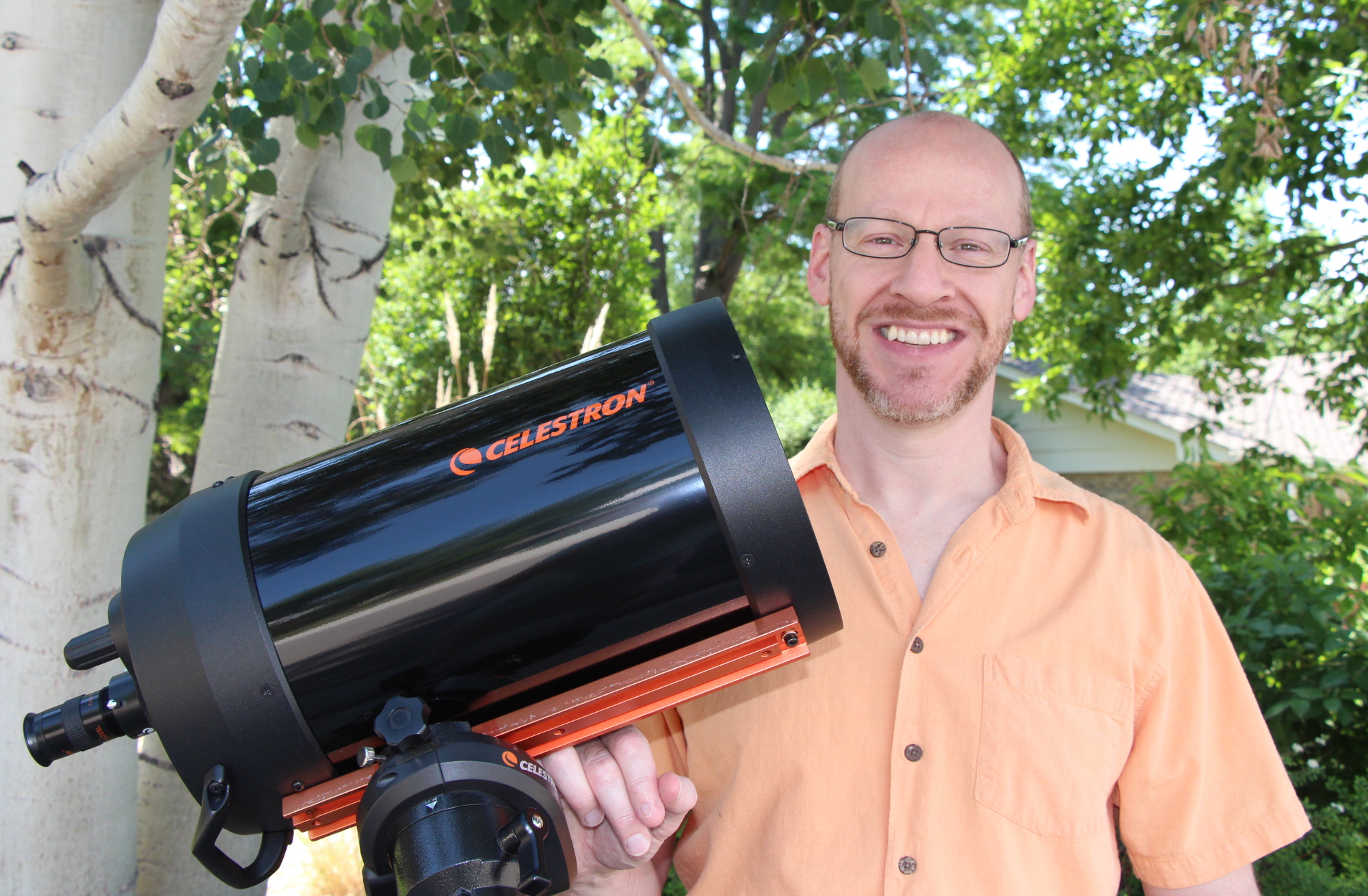
For as long as he can remember, Dr. Phil Plait has been in love with science.
“When I was maybe four or five years old, my dad brought home a cheapo department store telescope. He aimed it at Saturn that night. One look, and that was it. I was hooked,” he says.
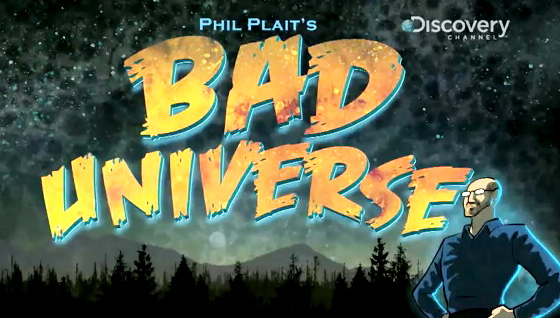
After earning his doctorate in astronomy at the University of Virginia, he worked on the Hubble Space Telescope as a NASA contractor at the Goddard Space Flight Center. He began a career in public outreach and education with the Bad Astronomy website and blog, debunking bad science and popular misconceptions. The book Bad Astronomy was released in 2002, followed in 2008 by Death From The Skies! He can most recently be seen in “Crash Course Astronomy”, a 46-part educational web series he wrote and hosted that has over 20 million views. He hosted the TV show “Phil Plait’s Bad Universe” on the Discovery Channel in 2010 and was the head science writer for “Bill Nye Saves the World” on Netflix, due out in 2017. Dr. Plait’s blog has been hosted by Discover Magazine and Slate, and is now on Syfy Wire.
Dr. Plait has given talks about science and pseudoscience across the US and internationally. He uses images, audio, and video clips in entertaining and informative multimedia presentations packed with humor and backed by solid science.
He has spoken at NASA’s Kennedy Space Center, NASA’s Dryden Flight Research Center, the Space Telescope Science Institute (home of Hubble), the Hayden Planetarium in NYC and many other world-class museums and planetaria, conferences, astronomy clubs, colleges & universities, and community groups. He has appeared on CNN, Fox News, MSNBC, Pax TV, Tech TV, Syfy, Radio BBC, Air America, NPR, and many other television and internet venues. His writing has appeared in Discover magazine, Sky and Telescope, Astronomy magazine, Night Sky magazine, Space.com, and more.
Star Tech: How we see the Universe
Every aspect of science has been profoundly affected — and usually improved — by the advent of technology. Our ability to investigate scientific phenomena has evolved vastly and rapidly in the past few decades. In this talk, astronomer Phil Plait goes over what, in his opinion, the three greatest advances have been in astronomy, arguably the world’s actual oldest profession.
Strange New Worlds: Is Earth special?
Since the 1990s, astronomers have found over four thousand (and counting!) exoplanets, alien worlds orbiting other stars. These planets orbit a wide variety of stars, and themselves are all wildly different; huge, small, hot, cold, airless, or with thick atmospheres. As we learn more about them, we come closer to answering the Big Questions: Is there another Earth out there? And if so, will it support life? Is Earth unique, or is the galaxy filled with blue-green worlds that look achingly like our own? In this engaging and fun talk, astronomer Phil Plait will show you how we find these planets, and how our own compares to them.
Science Communication in the Age of Snapchat
Facebook, Twitter, Snapchat, Instagram, YouTube, and good old TV: our attention is divided amongst so many different media outlets, and worse, some of them propagate misinformation and false facts. It is more important than ever to effectively communicate on science topics. But with so much competition, what’s the best way to engage? In this program Phil Plait, who has over 500,000 followers on Twitter, hosts a popular YouTube series, and is known for his social media presence, discusses different strategies to reach people. This informative and entertaining talk gives you some insight into getting the point across, encouraging everyone to be themselves and have fun while doing so.